Dances of India: Chhau
 The
etymological root of the word 'Chhau' is traced to the Sanskrit 'Chhaya'
or shade, referring to the mask used by the dancers.
The
etymological root of the word 'Chhau' is traced to the Sanskrit 'Chhaya'
or shade, referring to the mask used by the dancers.
Others
aver, it is derived from the word 'Chhauni' where the pharikhanda (shield
& sword) soldiers stayed.
The technique of the dance, in
fact, draws on steps and gait which have stemmed from the 'Pharikhanda
System'.
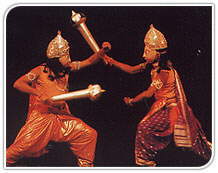
It is basically a martial dance where the mask holds
the dominant Rasa while the body creates, projects, and develops the
moods.
Chhau has three schools as such, coming from Seraikella
in Bihar, Mayurbhanj in Orissa and Purulia in West Bengal.
While
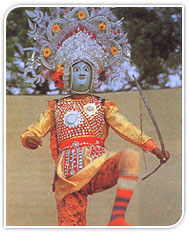
all the three Chhau forms are danced by men, Mayurbhanj uses no masks but
the others do.
The themes are based on mythology, everyday life,
aspects of nature or just a mood or emotion.
Purulia Chhau,
however, has a single focus - good triumphs over evil. The music is based
on Hindusthani Ragas and the accompaniment is with a Nagra, a huge kettle
drum, Dhol, a cylindrical drum, and Shehiiais or reed pipes.
The
strenuous nature of the dance restricts performances to brief periods, but
in Purulia Chhau a single item could be for forty minutes and a
performance, night-long.
 Home »Leisure In India