Music of India: Sitar
 The
invention of Sitar is commonly credited to Amir Khusrau, a courtier of
lauddin Khiiji in the 13th Century.
The
invention of Sitar is commonly credited to Amir Khusrau, a courtier of
lauddin Khiiji in the 13th Century.
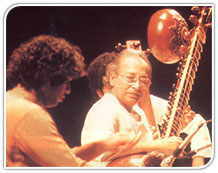
The name Sitar was derived
from Persian 'Seh-tar' meaning 'three strings' which the instrument
originally had.
But the modern Sitar has seven strings fastened
to the pegs on the neck and the sides.
Sixteen to twenty-two
frets are secured to the finger-board by pieces of gut. There are also 11
to 12 sympathetic strings below the frets, running parallel to the main
strings.
 The
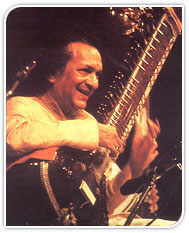
instrument is played by means of a wire plectrum worn on the forefinger of
the right hand. It was instrumental in introducing western audiences to
Indian Classical music.
The
instrument is played by means of a wire plectrum worn on the forefinger of
the right hand. It was instrumental in introducing western audiences to
Indian Classical music. Home »Leisure In India