Dances of India: Kuchipudi
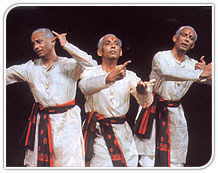 The
art form takes its name from the village of its birth, in the Krishna
district of Andhra Pradesh. Kuchipudi was the result of the Bhakti
Movement in the 6th Century, in South India.
The
art form takes its name from the village of its birth, in the Krishna
district of Andhra Pradesh. Kuchipudi was the result of the Bhakti
Movement in the 6th Century, in South India.
In the 17th
Century, Siddendra Yogi, the progenitor of the form, presented a
dance-drama with boys from the village of Kuchipudi. Consciously they
raised the form above the reach of the Devadasis.
The boys were
committed to an annual presentation the form and they passed on the
techniques to the next generation. So a tradition and a form were born.
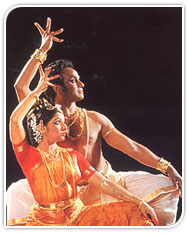 The
performer has to express throng dance and gestic language, speech and
song. The Kuchipudi artiste, apart from being a dancer and an actor has to
have a high proficiency - in the Sanskrit and Telugu languages, music and
the texts of performance.
The
performer has to express throng dance and gestic language, speech and
song. The Kuchipudi artiste, apart from being a dancer and an actor has to
have a high proficiency - in the Sanskrit and Telugu languages, music and
the texts of performance.
Kuchipudi plays are performed in the
open air on improvised stages at night. The sutradhar, or master of
ceremonies plays an integral role introducing characters, providing humour
and tying together the show.
The fast paced nature of the form
has made it a popular dramatic form. It is better known as a solo form
today but the wheel has come full circle with group work, with
experimental choreography much in demand.
 Home »Leisure In India